When travelers imagine Sri Lanka, they often picture the golden beaches of the south, the misty tea plantations of Ella, or the cultural triangle in the north. However, nestled in the lush, wet southwest of the island lies a city that holds the country’s most sparkling secrets.
Ratnapura.
The name itself is a promise. Derived from the Sanskrit words Ratna (gem) and Pura (city), Ratnapura is the “City of Gems.” For over two millennia, this wet, verdant region has been the primary source of Sri Lanka’s legendary mineral wealth. It is the place where King Solomon reportedly sourced rubies to woo the Queen of Sheba, and where the sapphire adorning Princess Diana’s engagement ring was likely unearthed.
But to reduce Ratnapura to a mere trading post for precious stones would be a mistake. Beyond the glitter of sapphires and rubies lies a region of immense ecological significance, deep spirituality, and colonial history. From the sacred footprint atop Adam’s Peak to the prehistoric fossils hidden in the clay, Ratnapura is a destination for the adventurer, the historian, and the dreamer.
In this comprehensive guide, we will explore the depths of the gem pits, climb the sacred mountains, and walk the rain-soaked streets of Sri Lanka’s most lucrative city.
Part 1: The Gemstone Legacy – The Glittering Heart of Rathnapura Sri Lanka
You cannot speak of Ratnapura without speaking of the earth beneath it. The geography of the Sabaragamuwa province is unique; millions of years of geological erosion washed minerals down from the central highlands, settling them in the riverbeds and valleys of Ratnapura. This layer of gem-bearing gravel, known locally as illam, is the lifeblood of the city.
The Trade of Kings
Sri Lanka is geologically termed a “gem box,” containing roughly 70 of the world’s 200 varieties of colored stones. Ratnapura is the capital of this trade. The most famous export is the Blue Sapphire, renowned for its distinct, cornflower-blue hue. However, the earth here also yields rubies, cat’s eyes, alexandrite, aquamarines, tourmalines, and topazes.
When you visit Ratnapura, the gem industry isn’t hidden away in factories; it is happening on the streets. If you walk towards the town center, particularly around the clock tower and the specialized gem markets (like the Abalawa), you will see men in white sarongs huddled in intense conversation, inspecting tiny stones against the sunlight. Millions of dollars change hands here, often in cash, on the dusty pavement.
Into the Pits: Traditional Mining
One of the most fascinating aspects of Ratnapura is that mining remains a largely manual, traditional process. Unlike the industrial strip-mining seen in Africa or South America, Sri Lankan gem mining is often small-scale and eco-conscious by necessity.
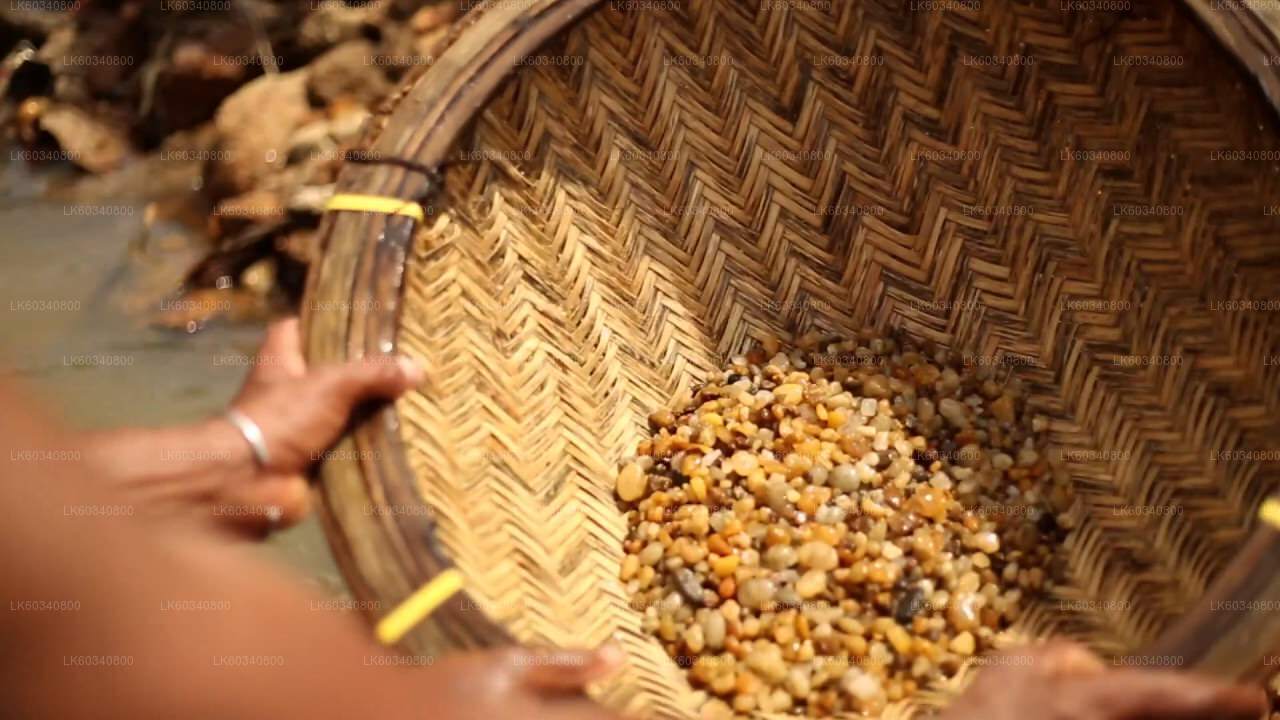
Visitors can tour these mines (with permission). You will see the pathalaya (mine shaft), reinforced with fern wood and bamboo. Miners descend into the mud, hauling up baskets of gravel. This gravel is then washed in the nearby river or in man-made pools using wicker baskets. The rhythmic swishing of the baskets separates the heavy gems from the lighter mud. It is a game of patience and luck. Watching a miner wash a basket, eyes scanning for that tell-tale glint of color, is a suspenseful experience.
Buying Gems
For the tourist, buying gems in Ratnapura can be the opportunity of a lifetime or a tourist trap.
- The Museums: There are several private gem museums and showrooms on the Colombo-Ratnapura road. They offer demonstrations of mining and cutting, followed by a showroom tour. This is the safest, albeit most expensive, way to buy.
- The Street: Buying on the street requires expert knowledge. Synthetic stones and heat-treated glass are common. Unless you are a gemologist, look but don’t buy high-value items on the street.
Part 2: Spirituality and The Sacred Peak
Ratnapura is not just about material wealth; it is a gateway to the divine. The city sits at the foot of one of the holiest mountains in the world.
Sri Pada (Adam’s Peak)
While the Hatton route is the most popular for tourists climbing Adam’s Peak, the Ratnapura-Gilimale route is the choice of the true pilgrim and the nature enthusiast.
Adam’s Peak (2,243m) is sacred to four religions. Buddhists believe the footprint at the summit is Lord Buddha’s; Hindus claim it is Shiva’s; Muslims and Christians believe it is where Adam first set foot on earth after being cast out of Eden.
The Ratnapura route is longer and more arduous than the Hatton route, taking roughly 7 to 9 hours to ascend. However, it is far more scenic. You walk through dense jungle, past ancient shrines, and alongside river rapids. Because it is less crowded, the connection with nature is profound.
- Best Time to Climb: The pilgrimage season runs from the full moon of December (Unduvap Poya) to the full moon of May (Vesak Poya). During this time, the path is illuminated by lights, and tea shops are open all the way to the top. Climbing off-season is dangerous due to rain, wind, and wild animals (including leopards and elephants).
Maha Saman Devalaya
Just a few kilometers from the city center stands the Maha Saman Devalaya, one of the most significant shrines in Sri Lanka. It is dedicated to God Saman, the guardian deity of Ratnapura and the sacred mountain.
The architecture is a beautiful example of the Kandyan era, with white walls and intricate wood carvings. The atmosphere here is one of heavy, incense-laden peace. If you visit during August or September, you might witness the Saman Devalaya Perahera. While smaller than the famous Kandy Perahera, it is incredibly authentic. It features traditional dancers, drummers, and caparisoned elephants parading through the streets to bless the city and its gem industry.
Part 3: A Biodiversity Hotspot
Ratnapura is located in the “Wet Zone.” It rains here—a lot. This high rainfall (over 3,000mm annually) creates a lush, green paradise that hosts some of the world’s rarest biodiversity.
Sinharaja Forest Reserve
A short drive from Ratnapura takes you to the borders of the Sinharaja Forest Reserve, a UNESCO World Heritage Site and the last viable area of primary tropical rainforest in the country.
For birdwatchers, this is Mecca. It is home to almost all of Sri Lanka’s endemic birds, including the elusive Red-faced Malkoha, the Sri Lanka Blue Magpie, and the Green-billed Coucal. The forest is dense, humid, and teeming with life. Leeches are common, so “leech socks” are a fashion staple here!
Unlike the dry zone parks (like Yala) where you sit in a jeep, Sinharaja is explored on foot. Trekking under the canopy of 40-meter tall trees, listening to the cacophony of cicadas and waterfalls, is a humbling reminder of nature’s power.
Waterfalls of the Region
The terrain around Ratnapura is rugged, and where there are mountains and rain, there are waterfalls.
- Bopath Ella: Located in Kuruwita, just before Ratnapura, this is one of Sri Lanka’s most distinct waterfalls. It is named for its shape, which resembles the leaf of the Sacred Bo Tree (Ficus religiosa). It is a popular bathing spot for locals, but caution is advised as the water levels can rise rapidly.
- Katugas Ella: Closer to town, this waterfall is hidden in the jungle. It requires a bit of a trek over slippery rocks, but the seclusion offers a perfect escape from the bustle of the city.
- Kirindi Ella: A taller, more dramatic fall that creates a misty pool at the bottom. The view from the observation deck is spectacular.
Part 4: History, Museums, and Culture
Ratnapura is an ancient settlement. The river beds have not only preserved gems but also the history of life itself.
The National Museum of Ratnapura
Housed in the majestic Ehelepola Walauwa, this museum is a must-visit. The building itself is historic, once belonging to Ehelepola Nilame, a Prime Minister during the Kingdom of Kandy who played a tragic role in the fall of the Kandyan monarchy to the British.
The museum’s collection is eclectic. It showcases:
- Paleontology: Fossils of rhinoceroses, hippopotamuses, and lions that once roamed Sri Lanka thousands of years ago, found preserved in the gem pits.
- Pre-history: Stone tools and artifacts from the Balangoda Man (Homo sapiens balangodensis), evidence of prehistoric human habitation in the caves of Sabaragamuwa.
- Colonial Artifacts: Swords, guns, and porcelain from the Portuguese, Dutch, and British eras.
Colonial Traces
While Ratnapura is thoroughly Sri Lankan, traces of the colonial past remain. The Ratnapura Dutch Fort spanned the top of a hill, though little remains today but the foundations and a shrine. However, the town is dotted with colonial-era planter’s bungalows, now converted into guesthouses or government buildings. These structures, with their wide verandas and high ceilings, speak to the era when rubber and tea plantations began to dominate the landscape alongside gem mining.
Part 5: The Ratnapura Experience – Food and Life
To truly know a city, you must taste it. Ratnapura offers a unique culinary landscape influenced by its wet climate and the energy-intensive work of its people.
What to Eat
- Kithul Jaggery: The Sabaragamuwa province is famous for Kithul (Fishtail Palm) products. The sap is tapped to make a sweet syrup (treacle) and solid blocks of sugar (jaggery). Ratnapura produces some of the finest jaggery in the island. It is eaten with curd or simply with a cup of plain tea.
- Rice and Curry: The local rice and curry is spicy and flavorful. Look for Polos (young jackfruit curry) and freshwater fish curries, sourced from the Kalu Ganga (Black River).
- Street Snacks: Near the bus stand and the gem market, try the Wade (lentil fritters) and Manioc chips.
The Vibe
Ratnapura feels different from tourist-centric towns like Ella or Galle. It is a working town. The tourism industry here is secondary to the gem trade. This gives it an authentic, gritty charm.
The town wakes up early. By 5:00 AM, the buses are running, and the tea shops are steaming. The climate is humid and hot during the day, but the evenings bring a cool breeze from the mountains. It is a city of umbrellas; you will rarely see a local without one, as the skies can open up without warning.
Part 6: Practical Travel Guide
Planning a trip to Ratnapura requires a bit of logistical knowledge. Here is what you need to know.
Getting There
Ratnapura is located about 100km southeast of Colombo.
- By Bus: The most common way. You can take the 122 bus (Colombo-Ratnapura-Embilipitiya). The AC buses via the High-Level Road take about 2.5 to 3 hours depending on traffic.
- By Car: A private taxi is the most comfortable option. The drive is scenic, passing through rubber plantations and paddy fields.
- No Trains: Note that there is no active railway line to Ratnapura. The old Kelani Valley line was dismantled years ago, though you can still see remnants of old bridges and stations.
Accommodation
Ratnapura caters to a mix of gem dealers and backpackers.
- Luxury/Boutique: There are beautifully restored colonial bungalows and eco-resorts on the outskirts of town, offering swimming pools and gem mine tours.
- Mid-range: The city center has several decent hotels that cater to business travelers (gem buyers).
- Budget: Guest houses are plentiful, particularly near the start of the Adam’s Peak route.
Best Time to Visit
- January to March: This is the driest period. It is the best time for trekking, climbing Adam’s Peak, and visiting mines (heavy rain can flood the mines, halting production).
- May to October: This is the Southwest Monsoon season. Expect heavy rain. While the waterfalls will be magnificent, outdoor activities like trekking will be difficult due to leeches and slippery paths.
What to Pack
- Rain gear: A high-quality raincoat or umbrella is non-negotiable.
- Leech protection: Leech socks or strong repellent (citronella oil or salt water).
- Light, breathable clothing: It is humid.
- Good hiking boots: If you plan to visit waterfalls or Sinharaja.
Part 7: The Future of Ratnapura
Ratnapura is a city in transition. The gem industry, while still lucrative, faces challenges regarding sustainability and regulation. However, the city is increasingly looking toward eco-tourism.
The preservation of the Sinharaja rainforest and the potential for “Geo-tourism” (tours focused on geology and mining history) are growing sectors. There is a push to move beyond just selling stones to selling the story of the stones—the ethical sourcing, the history, and the craft.
Furthermore, the completion of new highways connecting the province to the southern coast and the central highlands is making Ratnapura more accessible than ever. It is no longer just a stopover; it is becoming a hub.
Conclusion
Ratnapura is a place of contrast. It is where the mud of the riverbed meets the brilliance of the sapphire. It is where the chaotic commerce of the street market meets the silent sanctity of the mountain peak.
For the traveler who wants to see the “real” Sri Lanka, stripped of the beach-resort veneer, Ratnapura is essential. It challenges you. It might rain on you, you might get muddy, and you might get tired. But when you hold a rough gemstone in your hand, fresh from the earth, or watch the sunrise from the slopes of the wilderness, you understand why this city has captivated the world for two thousand years.
It is not just the City of Gems; it is a gem of a city. Hidden, multifaceted, and waiting to be discovered.
A Sample Itinerary for 2 Days in Ratnapura
Day 1: The Stones and the Shrine
- Morning: Arrive in Ratnapura. Visit a traditional Gem Mine (Gem Pit) to see the mining process. Try your hand at washing a basket of gravel.
- Lunch: Enjoy a traditional rice and curry at a local restaurant.
- Afternoon: Visit the National Museum of Ratnapura at Ehelepola Walauwa to see the fossils and artifacts.
- Late Afternoon: Visit a Gem Museum and lapidary to see how stones are cut and polished.
- Evening: Visit the Maha Saman Devalaya for the evening Puja (offering). Soak in the spiritual atmosphere.
Day 2: The Green Escape
- Morning: Early start. Drive to Bopath Ella waterfall. Take a dip in the designated safe areas.
- Late Morning: Proceed towards the edge of Sinharaja Forest Reserve (accessible from the Ratnapura side via Weddagala).
- Afternoon: Take a guided trek through the rainforest. Look for endemic birds and enjoy the pristine nature.
- Evening: Return to Ratnapura town. Walk through the town center, observe the street gem merchants (if active), and enjoy a cup of tea with Kithul Jaggery.
Frequently Asked Questions
Q: Is it safe to buy gems in Ratnapura?
A: It is safe if you go to a government-licensed lapidary or museum. Buying on the street is risky for novices as scams involving synthetic stones or colored glass do occur. Always ask for a certificate from the National Gem and Jewellery Authority for high-value purchases.
Q: Can I visit the mines?
A: Yes, but you generally need a guide or an arrangement through your hotel/tour operator. Most mines are on private land, so you cannot just walk in.
Q: Is Ratnapura worth visiting if I am not interested in gems?
A: Absolutely. The hiking, waterfalls, history, and proximity to Adam’s Peak and Sinharaja make it a top destination for nature lovers and history buffs.
Q: How are the roads?
A: The main roads leading to Ratnapura are generally good and paved. However, rural roads leading to waterfalls or forest entrances can be narrow and bumpy.
Q: Is there malaria?
A: Sri Lanka was certified malaria-free by the WHO. However, dengue fever (spread by mosquitoes) is a risk, especially in the wet zone. Use repellent and cover up during dawn and dusk.