If you close your eyes and imagine the quintessential Sri Lankan paradise, you likely picture a few specific things: swaying coconut palms leaning precariously over golden sand, turquoise water smashing against ancient coral reefs, and a sense of timeless tranquility. While places like Unawatuna and Mirissa have cemented themselves on the global backpacker map, there is a stretch of coastline just a few kilometers south of Galle that remains the discerning traveler’s secret. The Ultimate Guide to Thalpe Beach Sri Lanka.
Welcome to Thalpe Beach.
Often referred to by locals and expats as the “Golden Mile” or the “Hamptons of Sri Lanka,” Thalpe offers a different flavor of island life. It is quieter, more exclusive, and visually distinct from its neighbors thanks to its unique geological features—the famous rock pools. Whether you are a luxury traveler looking for a private villa, a digital nomad seeking inspiration, or an adventurer hunting for the perfect swim, Thalpe is a destination that demands your attention.
In this comprehensive guide, we will explore everything you need to know about this coastal haven, from the science behind its natural swimming pools to the best places to eat, sleep, and explore.
The Vibe: Why Choose Thalpe?
To understand Thalpe, you have to understand what it isn’t. It isn’t the party hub of Hikkaduwa, nor is it the crowded, sunbed-filled crescent of Unawatuna. Thalpe is where the pace slows down.
The coastline here is lined not with rows of budget hostels, but with high walls concealing historic Dutch-style villas and boutique hotels. This architecture gives the area an air of exclusivity. However, the beach itself is public and accessible to everyone. The vibe here is “barefoot luxury.” It is the place you go to read a book under a palm tree without being hassled by hawkers, to take a dip in calm waters protected by reefs, and to watch the sunset with a cocktail in hand while the sky turns a bruised purple and fiery orange.
If you are looking for nightlife and fire-dancers, go to Mirissa. If you are looking for peace, architectural beauty, and natural wonder, stay in Thalpe.
The Main Attraction: The Rock Pools
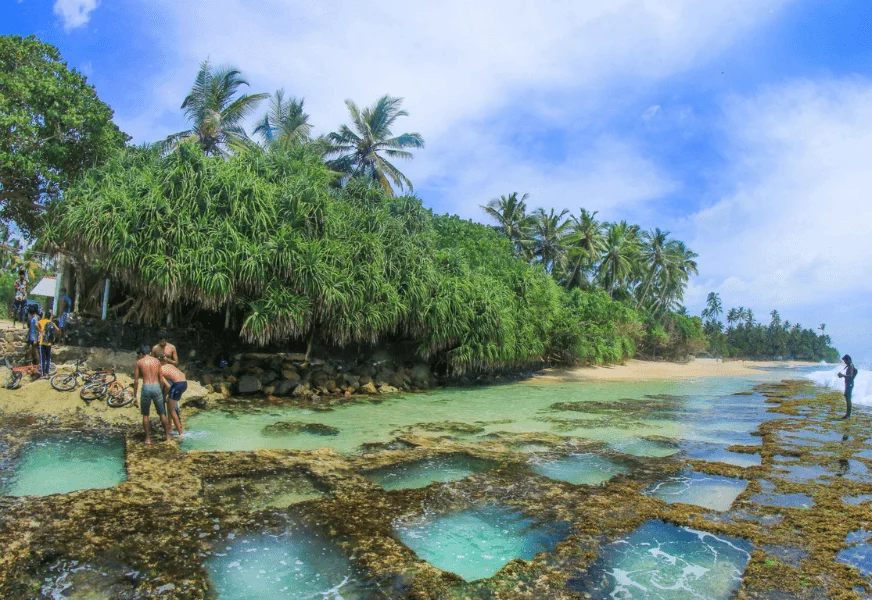
The defining feature of Thalpe Beach, and the primary reason it has exploded on Instagram in recent years, is the “Rock Pools.”
What are they?
Unlike the long, sandy gradient of other beaches, the shoreline at Thalpe is formed by an ancient coral reef that has calcified into a flat rock bed. Over centuries, erosion and perhaps human intervention (locals used to cut into the reef to soak coconut husks for coir rope production) have created rectangular, bath-like depressions in the rock.
The Experience
When the tide is low, the ocean recedes, leaving these rectangular pools filled with crystal-clear seawater. They function essentially as individual, natural Jacuzzis. The reef wall breaks the force of the Indian Ocean waves, so while the surf might be roaring just ten meters away, you are sitting in a tranquil, glass-like pool of water.
The water in these pools warms up under the tropical sun, making for a spa-like experience. Small fish often get trapped in the pools during low tide, meaning you are often bathing with tiny, colorful marine life.
Safety Tip: The rock pools are best enjoyed at low tide. At high tide, the waves can crash over the reef with significant force, making it difficult to see the edges of the pools and increasing the risk of being scraped against the sharp coral. Always wear reef shoes if you have sensitive feet, as sea urchins can sometimes be found in the crevices.
Beyond the Pools: Things to Do in and Around Thalpe
While it would be easy to spend your entire holiday lounging in the rock pools, Thalpe is perfectly positioned as a base for exploring the southern coast.
1. Spotting the Stilt Fishermen
One of the most iconic images of Sri Lanka is the stilt fisherman—men perched on a narrow crossbar tied to a pole driven into the seabed, fishing with a rod made of kithul wood. This traditional method is unique to this southern stretch of coast (Ahangama, Koggala, and Thalpe).
While technology and commercial fishing have made this method less viable for livelihood, it remains a practiced tradition and a cultural symbol. You will often see them at dawn or dusk. Note: In recent years, some fishermen pose specifically for tourists. If you take a photo, it is polite and customary to offer a small tip.
2. The Dalawella Rope Swing
Technically located on the border of Thalpe and Dalawella (Wijaya Beach), this is perhaps the most famous palm tree in Sri Lanka. The coconut palm leans almost horizontally over the water, and a rope swing allows thrill-seekers to launch themselves out over the ocean. It is the ultimate photo op.
3. A Day Trip to Galle Fort
Thalpe is located only 15 to 20 minutes by tuk-tuk from the UNESCO World Heritage site of Galle Fort. This 17th-century fortification is a living city.
- Morning: Walk the ramparts to see the lighthouse and the clock tower.
- Lunch: Dine in a restored Dutch colonial building.
- Afternoon: Shop for gemstones, spices, and handmade linens in the narrow, cobblestone streets.
- Evening: Watch the sunset from the fort walls, where locals gather to fly kites and play cricket.
4. Visit the Sea Turtle Hatcheries
The southern coast is a nesting ground for several species of sea turtles, including Green Turtles and Leatherbacks. Several hatcheries in the area (Habaraduwa, just a few minutes south) work to protect eggs from poachers and predators. Visiting these centers supports their conservation efforts, and you might get the chance to release a rehabilitated turtle or hatchlings back into the ocean.
5. Surfing (For Nearby Breaks)
While Thalpe’s reef makes it tricky for surfing directly in front of the villas, you are sandwiched between excellent surf spots.
- Unawatuna: Great for beginners.
- Dewata: A beach break perfect for learning.
- Ahangama/Midigama: Just 10 minutes south, offering world-class reef breaks for intermediate and advanced surfers.
Where to Stay: The “Golden Mile” Guide
Thalpe’s accommodation scene is dominated by the villa market, but options exist for various budgets.
The Ultra-Luxury Villas
If you are traveling with a group or seeking a honeymoon splurge, Thalpe is the place to rent a private villa. Properties here often come with a full staff, including a private chef and security. These villas open directly onto the beach.
- Look for: Properties that advertise “beachfront” on the Golden Mile. Many are restored colonial homes with high ceilings, polished cement floors, and infinity pools that blend into the Indian Ocean.
Boutique Hotels
For those who want luxury without renting an entire house, several boutique hotels offer intimacy and high-end service.
- Owl and the Pussycat: A whimsical, colorful, and artsy hotel that breaks the mold of traditional colonial decor. It offers incredible food and a vibrant atmosphere right on the water.
- Coco Bay Unawatuna: Located on the border, offering direct access to a private section of the beach.
Budget and Mid-Range
While the beach side of the road is “Millionaire’s Row,” the land side (across the Matara Road) offers lovely guesthouses and B&Bs at a fraction of the price. You simply have to cross the street to access the ocean.
- Tip: Look for homestays run by local families. You will often get a cleaner room and better breakfast (string hoppers and coconut sambol!) than in a mid-range hotel.
A Culinary Journey: Where to Eat
Thalpe’s dining scene is a mix of high-end hotel dining and beachside shacks.
1. Wijaya Beach Restaurant
Located just north of Thalpe, this is an institution. Famous for its wood-fired pizzas (which some claim are the best in Sri Lanka), it attracts a crowd every night. The vibe is lively, the beer is cold, and you can often see sea turtles swimming in the surf right off the deck while you eat.
2. Talpe Beach Restaurant & Bar
A great spot for fresh seafood. Order the “Catch of the Day”—usually Red Snapper, Seer Fish, or Para fish—grilled with garlic butter and lime.
3. Street Food
Don’t ignore the “kade” (small shops) along the main road.
- Short Eats: Try Isso Wade (spicy lentil cakes with prawns) or vegetable rotis.
- Curd and Treacle: A must-try dessert. Buffalo curd (similar to thick yogurt) topped with Kithul treacle (palm syrup). It’s available in clay pots at roadside stands.
4. Villa Dining
Many of the boutique hotels allow non-guests to dine in their restaurants. This is a great way to experience the luxury of the Golden Mile without the price tag of an overnight stay.
Best Time to Visit
Understanding Sri Lanka’s weather patterns is crucial, as the island has two monsoons affecting different coasts at different times.
Peak Season (December to April):
This is the dry season for the South Coast. The sea is calm, the sky is blue, and the humidity is manageable. This is the best time for swimming in the rock pools, as the visibility is high and the waves are gentle.
- Downside: Prices are highest, and crowds are larger (though Thalpe remains quieter than other beaches).
Shoulder Season (September – November / April – May):
You might encounter afternoon thunderstorms, but the days are often sunny. Prices drop significantly.
Monsoon Season (May to August):
The Southwest Monsoon brings rough seas and rain. Swimming can be dangerous due to strong currents, and the rock pools may be washed out by high waves. However, the landscape is incredibly lush and green, and you can find amazing deals on luxury villas.
How to Get to Thalpe
Thalpe is easily accessible, located on the main coastal road (A2).
From Colombo International Airport (CMB):
- Taxi/Private Transfer: The most comfortable option. Taking the Southern Expressway (E01), the journey takes about 2 to 2.5 hours. Expect to pay between $60 – $90 USD depending on the vehicle.
- Train: For the adventurous and budget-conscious. Take a taxi from the airport to Colombo Fort Station. From there, catch the train to Galle or Matara. The coastal train ride is legendary, offering views of the ocean right outside the window. Get off at Galle or Unawatuna and take a 15-minute tuk-tuk to Thalpe.
Getting Around Locally:
- Tuk-tuk: The lifeline of Sri Lankan transport. Always negotiate the price before getting in, or ask the driver to use the meter (though meters are rarer outside of Colombo).
- Scooter Rental: You can rent a scooter for roughly $5-$8 USD per day. It gives you the freedom to explore the coast at your own pace. Note: You technically need a temporary Sri Lankan driving permit, which can be obtained in Colombo, though police enforcement varies.
Essential Packing List for Thalpe
- Reef Shoes: Essential for exploring the rock pools and protecting feet from sharp coral.
- High SPF Sunscreen: The sun in Sri Lanka is intense. Look for “Reef Safe” sunscreen to protect the delicate marine ecosystem.
- Mosquito Repellent: Tropical climates mean mosquitoes, especially around dusk.
- Modest Clothing: While bikinis are fine on the beach, you must cover your shoulders and knees when visiting temples or walking through local villages/towns.
- GoPro or Waterproof Phone Case: You will want to capture the underwater life in the pools.
Responsible Tourism in Thalpe
As Thalpe grows in popularity, preserving its charm is a shared responsibility.
- Respect the Reef: Do not break off coral or stand on living reef structures.
- Plastic-Free: Sri Lanka struggles with plastic waste. Bring a reusable water bottle (many villas provide filtered water) and refuse plastic straws.
- Animal Welfare: Avoid attractions that exploit animals. If visiting a turtle hatchery, ensure it is a legitimate conservation project and not just a tourist trap.
- Support Local: Eat at local “rice and curry” shops, buy fruits from roadside stalls, and tip your tuk-tuk drivers and service staff.
A Sample 3-Day Thalpe Itinerary
To help you visualize your trip, here is a perfect 3-day plan.
Day 1: Arrival & The Pools
- Afternoon: Check into your villa or hotel. Walk down to the beach.
- Late Afternoon: Head to the Rock Pools as the tide goes out. Soak in the warm water as the sun begins to lower.
- Dinner: Fresh seafood BBQ at a beachside restaurant.
Day 2: Culture & History
- Morning: Early start to see the stilt fishermen. Breakfast at a local cafe.
- Mid-Day: Relax in the shade or take a dip. It’s too hot to explore.
- Late Afternoon (3:30 PM): Take a tuk-tuk to Galle Fort. Walk the ramparts, visit the museum, and shop. Stay for sunset.
- Dinner: Dining inside the Fort at a colonial courtyard restaurant.
Day 3: Adventure
- Morning: Visit the Handunugoda Tea Estate (the Virgin White Tea Plantation) located slightly inland near Koggala. It’s one of the few tea plantations near sea level.
- Lunch: Wijaya Beach for pizza and beer.
- Afternoon: Swing on the rope swing at Dalawella and swim with the turtles.
- Evening: Sunset cocktails at your hotel and a quiet night listening to the waves.
Conclusion
Thalpe Beach is more than just a pin on a map; it is a feeling. It captures the essence of the old Ceylon—a place where nature is still the primary architect and where time seems to stretch a little longer.
While the “Rock Pools” are the hook that draws you in, it is the atmosphere that will make you stay. It is the perfect balance of luxury and authenticity, offering a sanctuary for those who find the main tourist strips too loud and the remote jungle too quiet.
So, when you are planning your Sri Lankan odyssey, carve out a few days for Thalpe. Pack your swimsuit, bring a good book, and prepare to discover your own private slice of the Indian Ocean. The rock pools are waiting.
Frequently Asked Questions (FAQ)
Is Thalpe Beach safe for swimming?
The open ocean can be rough with strong currents. However, the rock pools provide safe, enclosed areas for soaking. Always swim where locals swim and heed red flag warnings.
How far is Thalpe from Unawatuna?
It is very close—only about 2 to 3 kilometers. A tuk-tuk ride takes less than 10 minutes.
Are there ATMs in Thalpe?
There are a few ATMs along the main road, but it is always wise to carry cash, especially for small purchases and tuk-tuks. The nearest major banks are in Unawatuna or Galle.
Is Thalpe family-friendly?
Yes. The rock pools are great for kids (under supervision) as they are shallow and free of waves. The villas offer a home-away-from-home environment that is easier for families than cramped hotel rooms.
Can I surf at Thalpe?
Not directly at the main rock pool area due to the shallow reef. However, excellent surf spots are within a 5-10 minute tuk-tuk ride in either direction.