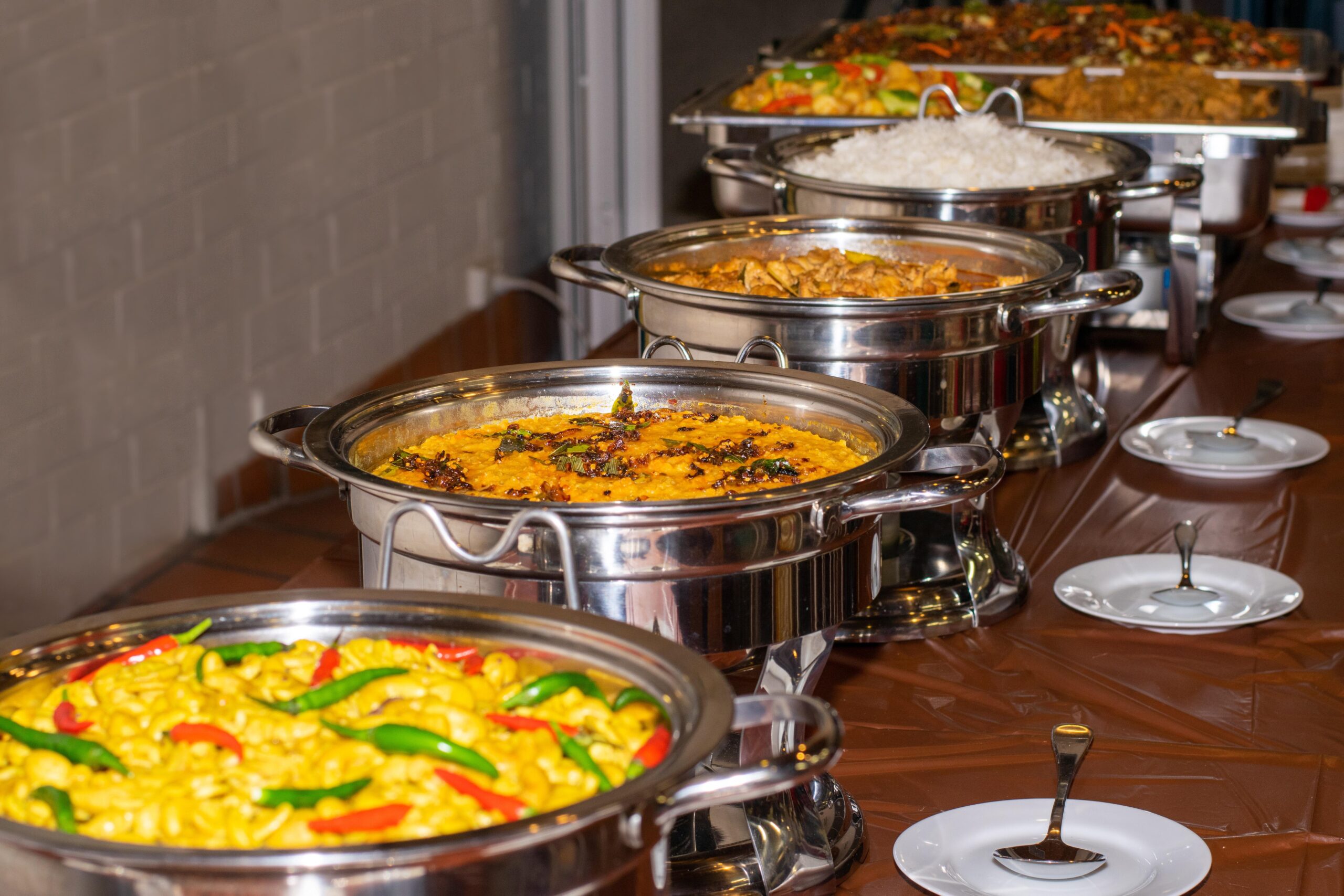
Sri Lanka, the “Teardrop of India”, is an island defined by its history as a central hub of the ancient Silk Road. For centuries, traders from Arabia, China, Europe, and India converged here, bringing with them a treasure trove of ingredients. When these foreign influences merged with the island’s lush, tropical abundance, a culinary identity was born that is unlike anything else in the world.
What is Traditional Sri Lankan Food?
To eat traditional Sri Lankan food is to experience a symphony of contrasts: fiery heat met by cooling coconut milk, crunchy textures paired with soft grains, and the unmistakable aroma of toasted spices.
In this guide, we dive deep into the heart of the Sri Lankan kitchen.
1. The Foundation: Rice and Curry
If there is one phrase that defines Sri Lankan eating habits, it is “rice and curry”. This isn’t just a meal; it is a daily ritual.
A standard Sri Lankan plate consists of a large mound of steamed rice (often the Samba or Keeri Samba variety) surrounded by 5 to 7 different vegetable curries, a protein (fish, chicken, or goat), and a variety of condiments.
The Art of the “Dhal” (Parippu)
No rice and curry meal is complete without Parippu. Red lentils are cooked in a mixture of turmeric, onions, and curry leaves, then finished with a thick splash of coconut milk. It provides a creamy, mild base that balances out the spicier dishes on the plate.
Pol Sambol: The Island’s Heartbeat
If Sri Lanka had a national condiment, it would be pol sambol. This is a fresh coconut relish made by grinding shredded coconut with dried red chillies, red onions, lime juice, and a hint of Maldive fish (cured tuna flakes). It is salty, spicy, and zesty—the perfect accompaniment to almost any meal.
2. The Iconic “Hoppers” (Appa)
While rice and curry dominate lunch, Hoppers rule the mornings and evenings.
Hoppers are bowl-shaped pancakes made from a fermented batter of rice flour and coconut milk with a dash of toddy (palm wine). They are cooked in small, high-sided pans called Appa Chatti.
- Plain Hoppers: Crispy around the edges and soft/doughy in the centre.
- Egg Hoppers: A whole egg is cracked into the centre while the hopper is cooking, seasoned with black pepper and salt.
- String Hoppers (Idiyappam): These are not pancakes but nests of thin, steamed rice noodles, usually served with a thin coconut gravy known as Kiri Hodi.
3. The Street Food King: Kottu Roti
Walk down any street in Colombo or Galle at night, and you will hear a rhythmic “clank-clank-clank” sound. This is the sound of Kottu Roti being made.
Kottu is the ultimate comfort food. It consists of Godamba roti (a thin, flat bread) that is chopped into small strips on a hot metal griddle and mixed with eggs, onions, leeks, cabbage, and a spicy meat curry. It’s a chaotic, delicious stir-fry that has become a symbol of Sri Lankan urban culture.
4. Seafood: A Gift from the Ocean
Being an island nation, seafood is central to the traditional diet.
Ambul Thiyal (Sour Fish Curry)
Originating from the southern coast, Ambul Thiyal is perhaps the most unique Sri Lankan dish. Firm fish (usually tuna) is cubed and sautéed in a blend of spices including black pepper, cinnamon, and turmeric. The star ingredient, however, is goraka (Garcinia cambogia), a small dried fruit that gives the curry its signature sour flavour and dark, dry texture. Because of the acidic properties of the Goraka, this curry can stay fresh for several days without refrigeration.
5. The Role of the Coconut Tree
In Sri Lanka, the coconut tree is called the “Tree of Life”. Almost every part of the fruit is used in traditional cooking:
- Coconut Milk: Used as the base for almost all gravies.
- Coconut Oil: The primary frying medium.
- Coconut Scrapings: Used for sambols and sweets.
- Coconut Vinegar: Used to preserve pickles and season curries.
6. The “Wundera” Spices
The secret to the depth of flavour in Sri Lankan food lies in the roasted curry powder. Unlike Indian curry powders, Sri Lankan spices (coriander, cumin, and fennel) are often roasted until they turn a deep chocolate brown before being ground. This creates a smokier, more intense flavour profile.
Essential aromatics include:
- Curry Leaves (Karapincha): Found in almost every savoury dish.
- Pandanus Leaves (Rampe): Adds a nutty, floral aroma to rice and curries.
- Ceylon Cinnamon: The world’s finest cinnamon, native to the island.
7. Sweets and Desserts
Sri Lankans have a legendary sweet tooth, often fuelled by Kithul Jaggery (syrup from the fishtail palm).
- Watalappam: A rich, spiced coconut custard pudding made with jaggery, eggs, cardamom, and cloves. It was brought to the island by Malay immigrants and is now a staple at celebrations.
- Kavum (Oil Cakes): Deep-fried flour cakes made with treacle and rice flour, often featuring a distinctive “hump” on top.
- Kokis: A crispy, star-shaped snack made from rice flour and coconut milk, deep-fried in a mould.
8. Regional Variations: North vs. South
While the basics remain the same, geography influences the plate:
- The North (Jaffna): Influenced by South Indian cuisine, the food here is often spicier and uses more palmyra products and seafood like crab and prawns. The Jaffna Crab Curry is legendary.
- The Hill Country (Kandy/Nuwara Eliya): Focuses more on temperate vegetables and heavy use of fresh spices.
- The South: Known for its heavy use of fish, black pepper, and extra-spicy preparations.
9. Etiquette: How to Eat Like a Local
To truly experience traditional Sri Lankan food, you must put down the cutlery. Sri Lankans traditionally eat with their right hand.
The technique involves using your fingertips to mix a bit of rice with the various curries, creating a “perfect bite” that includes a bit of everything. Eating with your hands allows you to feel the textures and is said to make the food taste better!
Conclusion
Traditional Sri Lankan food is more than just sustenance; it is a reflection of the island’s vibrant history, its diverse ecosystems, and the hospitality of its people. Whether you are sweating over a spicy Jaffna crab curry or enjoying a cooling Watalappam, every bite tells a story of an island that has truly mastered the art of flavour.
If you are visiting for the first time, don’t be afraid of the spice—embrace the heat, and you’ll discover one of the most sophisticated cuisines on the planet.