Sri Lanka, the teardrop-shaped island in the Indian Ocean, is a land of extraordinary natural beauty. Among its many treasures, the country’s waterfalls stand out as some of the most breathtaking attractions, drawing nature lovers, adventure seekers, and photographers from around the world. With over 400 waterfalls scattered across its mountainous terrain, Sri Lanka offers an unparalleled opportunity to witness the raw power and serene beauty of cascading water in tropical paradise settings. Sri Lanka Top Waterfalls.
The island’s unique geography, characterized by central highlands rising dramatically from coastal plains, creates the perfect conditions for spectacular waterfalls. Monsoon rains, which drench the island twice a year, feed countless streams and rivers that plunge down steep escarpments, creating curtains of white water that crash into emerald pools below. These natural wonders are not just scenic attractions; they’re integral to Sri Lankan culture, featuring in ancient folklore and serving as vital water sources for communities that have thrived in their shadows for millennia.
Bambarakanda Falls: Sri Lanka’s Tallest Cascade
Standing at an impressive 263 meters (863 feet), Bambarakanda Falls holds the distinction of being Sri Lanka’s tallest waterfall. Located in the Badulla District, about 5 kilometers from the Kalupahana village, this majestic cascade is formed by the Kuda Oya stream as it plunges down a sheer rock face in the Horton Plains.
The journey to Bambarakanda is an adventure in itself. The waterfall is accessible via a moderate trek through pine forests and tea plantations, offering visitors stunning views of the surrounding countryside. The best time to visit is during or just after the monsoon season, from October to January, when the waterfall is at its most powerful and impressive. During the dry season, the flow reduces to a trickle, though the dramatic cliff face remains a sight to behold.
What makes Bambarakanda particularly special is its relatively undeveloped surroundings. Unlike some of Sri Lanka’s more famous waterfalls, this giant has retained much of its wild character. The pool at its base is perfect for a refreshing swim, though visitors should exercise caution during the rainy season when currents can be strong. The mist created by the falling water creates a magical atmosphere, often producing rainbows that arch across the gorge.
Diyaluma Falls: The Second Highest Wonder
At 220 meters (722 feet), Diyaluma Falls is Sri Lanka’s second-tallest waterfall and arguably one of the most rewarding to visit. Located between Wellawaya and Haputale in the Badulla District, Diyaluma offers something that Bambarakanda doesn’t: the opportunity to swim in natural infinity pools at the top of the falls.
The main waterfall can be viewed from the roadside, but the real adventure begins when you take the hour-long hike to the summit. The trail winds through tea estates and local villages, offering glimpses into rural Sri Lankan life. At the top, you’ll discover a series of natural rock pools where the water collects before making its dramatic descent. These pools have become famous on social media, and for good reason—they offer the surreal experience of swimming at the edge of a massive waterfall with panoramic views of the surrounding valleys.
Safety is paramount when visiting the upper pools. The rocks can be slippery, and during heavy rains, the current becomes dangerously strong. It’s advisable to visit during the dry season (December to March) for the safest and most enjoyable experience. Local guides are available and highly recommended, especially for first-time visitors who may not be familiar with the terrain.
The view from the top is nothing short of spectacular. On clear days, you can see for miles across the tea country, with the waterfall’s multiple cascades creating a stunning foreground to the endless green hills. Sunset at Diyaluma is particularly magical, as the golden light bathes the landscape in warm hues and the surrounding clouds create dramatic shadows across the valleys.
Devon Falls and St. Clair’s Falls: The Twin Beauties – Sri Lanka Top Waterfalls
Located near the town of Talawakelle, Devon Falls and St. Clair’s Falls are often visited together due to their proximity to each other and the main Nuwara Eliya-Hatton road. These waterfalls offer the convenience of roadside viewing, making them accessible to travelers who may not be able to undertake lengthy hikes.
Devon Falls, named after a British coffee plantation owner, plunges 97 meters (318 feet) down a rocky cliff surrounded by verdant tea plantations. The waterfall is best viewed from the roadside viewpoint, where you can appreciate its full height and the way it tumbles through multiple tiers before disappearing into the forest below.
Just three kilometers away, St. Clair’s Falls—often called the “Little Niagara of Sri Lanka”—is one of the widest waterfalls on the island. At 80 meters (265 feet) high, it cascades in two separate falls known as the “Maha Ella” (Greater Falls) and “Kuda Ella” (Lesser Falls). The viewing platform offers an excellent vantage point, and on sunny days, the mist from the falls creates beautiful rainbows.
The area surrounding both waterfalls is a testament to Sri Lanka’s famous tea industry. The manicured green slopes of tea bushes create a striking contrast with the wild, untamed water, making this region particularly photogenic. Many visitors combine a waterfall visit with a tour of a nearby tea factory to complete their highland experience.
Ravana Falls: Myth and Majesty
Located in the Ella region, Ravana Falls is not just a natural wonder but also a site of cultural significance. According to the ancient Indian epic Ramayana, this waterfall is believed to be associated with the demon king Ravana, who is said to have hidden Princess Sita in caves behind the falls after abducting her from India.
The waterfall drops approximately 25 meters (82 feet) in a wide, curtain-like cascade that spreads across the rock face. During the rainy season, Ravana Falls is particularly impressive, with water rushing down with tremendous force. The falls are easily accessible from the main Ella-Wellawaya road, with steps leading down to a pool at the base where swimming is possible during the dry season.
What sets Ravana Falls apart is its scenic setting. Surrounded by lush jungle and rocky outcrops, the waterfall is framed by tropical vegetation that seems to glow in the dappled sunlight. The area has been developed with basic facilities, including small shops and changing rooms, making it a convenient stop for travelers exploring the Ella region.
For the adventurous, there’s a challenging hike to the top of the falls and beyond to the legendary Ravana Cave. The trail is steep and requires a good level of fitness, but those who make the climb are rewarded with spectacular views and a sense of connection to ancient legends.
Baker’s Falls: A Gem in Horton Plains
Located within Horton Plains National Park, Baker’s Falls is a must-visit for anyone exploring Sri Lanka’s highland plateau. Named after the famous British explorer Sir Samuel Baker, this 20-meter (66-foot) waterfall is part of a stunning highland ecosystem that includes grasslands, cloud forests, and unique flora and fauna.
The falls are accessed via a moderate trek through the national park, which requires an entrance fee and typically takes about an hour from the main parking area. The trail winds through different ecosystems, offering opportunities to spot endemic birds and, if you’re lucky, sambar deer grazing in the grasslands.
What makes Baker’s Falls particularly special is its setting in the misty highlands. At an elevation of over 2,000 meters, the area is often shrouded in cool mist, creating an otherworldly atmosphere. The waterfall itself drops into a deep gorge surrounded by ancient trees and ferns, with the sound of rushing water echoing through the forest.
Most visitors combine Baker’s Falls with a trip to World’s End, another spectacular attraction within Horton Plains where the plateau drops away in a 880-meter sheer cliff. The combination makes for an unforgettable day of hiking and nature appreciation in one of Sri Lanka’s most unique environments.
Dunhinda Falls: The Misty Cascade
Located near Badulla in the Uva Province, Dunhinda Falls is one of Sri Lanka’s most photographed waterfalls. The name “Dunhinda” means “mist-laden,” a reference to the cloud of spray created by the water as it crashes down 64 meters (210 feet) into a large pool below.
The approach to Dunhinda is delightful, involving a relatively easy 1.5-kilometer walk along the Badulu Oya river through thick jungle. The path crosses several small streams and passes through shaded forest, offering a welcome respite from the tropical heat. The sound of the falls grows louder as you approach, building anticipation for the spectacular reveal.
When you finally emerge at the viewing platform, the sight is breathtaking. The waterfall appears as a solid column of white water, with spray billowing outward like smoke. The pool at the base is large and deep, inviting for swimming during the dry season, though the powerful spray can make it challenging to see clearly. The surrounding rocks are slippery, so caution is advised.
Dunhinda is particularly impressive during the southwest monsoon (May to August) when the volume of water is at its peak. However, this also makes swimming dangerous, and visitors should admire the falls from the safety of the viewing areas during this time.
Ramboda Falls: A Highland Spectacle
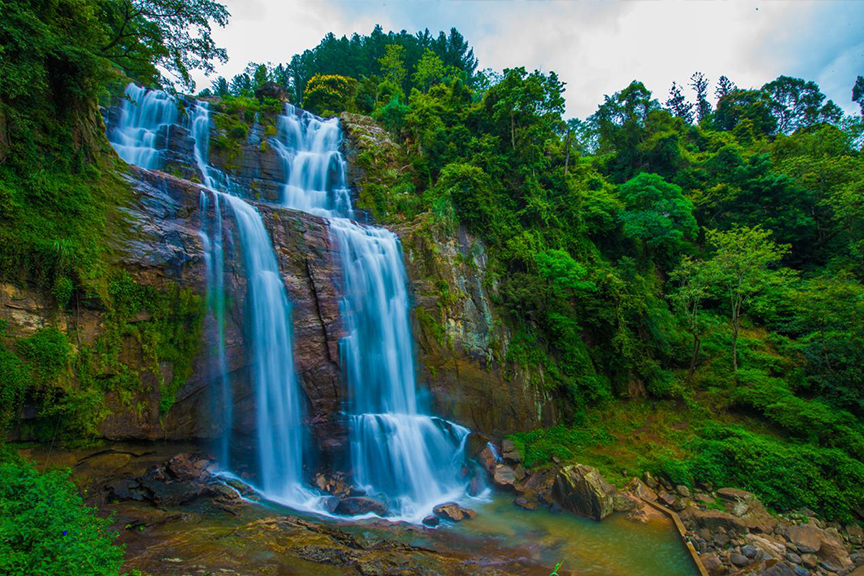
Situated along the Pussellawa–Nuwara Eliya road, Ramboda Falls is actually a series of cascades with a combined height of 109 meters (358 feet). The main fall, which is the most visible from the road, drops about 109 feet and is one of the most accessible waterfalls in Sri Lanka’s hill country.
The waterfall is divided into three sections, with the highest section being the most dramatic. The water flows from the western slope of the Pidurutalagala mountain range, fed by tributaries that drain the surrounding tea estates. The best viewing point is from the Ramboda Falls Hotel, which was specifically built to offer guests spectacular views of the cascade.
What makes Ramboda special is its consistency throughout the year. Even during the dry season, there’s enough water flow to maintain its impressive appearance, making it a reliable stop for travelers regardless of when they visit. The surrounding area is quintessential Sri Lankan hill country, with emerald tea plantations carpeting the slopes and colonial-era bungalows dotting the landscape.
Conclusion: Preserving Natural Heritage
Sri Lanka’s waterfalls are more than just tourist attractions; they’re vital components of the island’s ecosystem and cultural heritage. These cascading wonders provide essential water sources for agriculture, support diverse ecosystems, and offer recreational opportunities that contribute to local economies through tourism.
As visitor numbers increase, the importance of responsible tourism becomes paramount. Travelers should respect safety guidelines, avoid littering, and stay on designated paths to minimize environmental impact. Many of these waterfalls are located in or near protected areas, and preserving their pristine condition requires the cooperation of both visitors and local communities.
Whether you’re seeking adventure, natural beauty, or a refreshing escape from tropical heat, Sri Lanka’s waterfalls offer unforgettable experiences. From the towering heights of Bambarakanda to the legendary pools of Ravana Falls, each cascade tells its own story and rewards visitors with memories that last a lifetime. As you plan your journey through this island paradise, make sure to include several of these magnificent waterfalls in your itinerary—they represent some of the finest natural wonders not just in Sri Lanka, but in all of South Asia.