Traditional Sri Lankan food is a vivid expression of the island’s history, climate, agriculture, and multicultural roots. It’s a cuisine built around rice, coconut, aromatic spices, and a remarkable variety of curries—ranging from delicate and herbal to fiery and deep with roasted spice. But “traditional Sri Lankan food” isn’t just one thing. It’s a whole way of eating: a table (or banana leaf) filled with many small dishes, each adding a different flavor and texture—spicy, sour, sweet, bitter, crunchy, creamy—balanced in one meal. What is Traditional Sri Lankan Food?
From humble home-cooked rice and curry to celebratory dishes served at festivals and weddings, Sri Lankan food is both comforting and complex. It’s also deeply regional: what you eat in the coastal south can differ from what you’ll find in the hill country, the dry zone, or the multicultural neighborhoods of Colombo and Jaffna.
Below is a guided tour of what traditional Sri Lankan food is, what defines it, and which dishes best represent it.
What is Traditional Sri Lankan Food? : Rice, Coconut, and Spice
Rice at the center
Sri Lanka is, above all, a rice-eating culture. The most iconic daily meal is rice and curry, where steamed rice is served with multiple curries and accompaniments. Rice may be white or red (a popular local variety with a nutty taste). The rice isn’t merely a side—it’s the base that brings all the different dishes together.
Coconut in many forms
If rice is the backbone, coconut is the soul. Traditional cooking uses coconut as:
- Coconut milk (thick or thin) for creamy curries
- Grated coconut in sambols and sweets
- Coconut oil for frying and tempering spices
- Coconut water as a refreshing drink
- Coconut vinegar in pickles and tangy curries
The coconut tree is often called the “tree of life” for a reason: almost every part of it ends up in the kitchen.
A spice palette shaped by trade
Sri Lanka has been famous for spices for centuries, attracting traders from Arabia, India, Europe, and Southeast Asia. The spice rack is broad, but a few ingredients define traditional flavor:
- Curry leaves (earthy, aromatic, essential in tempering)
- Pandan leaf (a sweet, grassy fragrance)
- Cinnamon (Sri Lanka is home to true Ceylon cinnamon)
- Cardamom, cloves, nutmeg
- Black pepper
- Chili (fresh green chili and dried red chili)
- Goraka (garcinia) (a souring agent, common in fish curries)
- Tamarind (another sour element, especially in some regions)
- Fenugreek, mustard seeds
- Turmeric (for color and warmth)
A key element is roasted curry powder—spices toasted until dark and aromatic. Many households have their own blend, which gives home cooking a signature taste.
The Classic Meal: Rice and Curry
If you ask what traditional Sri Lankan food is, rice and curry is the clearest answer. It typically includes:
- A main rice portion
- 2–6 curries, often a mix of vegetable, lentil, and meat or fish
- Sambols (fresh relishes)
- Mallung (lightly cooked greens with coconut)
- Something tangy (pickle or sour curry)
- Something crunchy (papadam, fried dried fish, or fried chilies)
Common curries and sides
Here are some staples found at traditional tables:
1) Dhal (parippu) curry
A comforting lentil curry cooked with coconut milk, turmeric, curry leaves, onion, and green chili. It’s mild, creamy, and often the “glue” that ties the meal together.
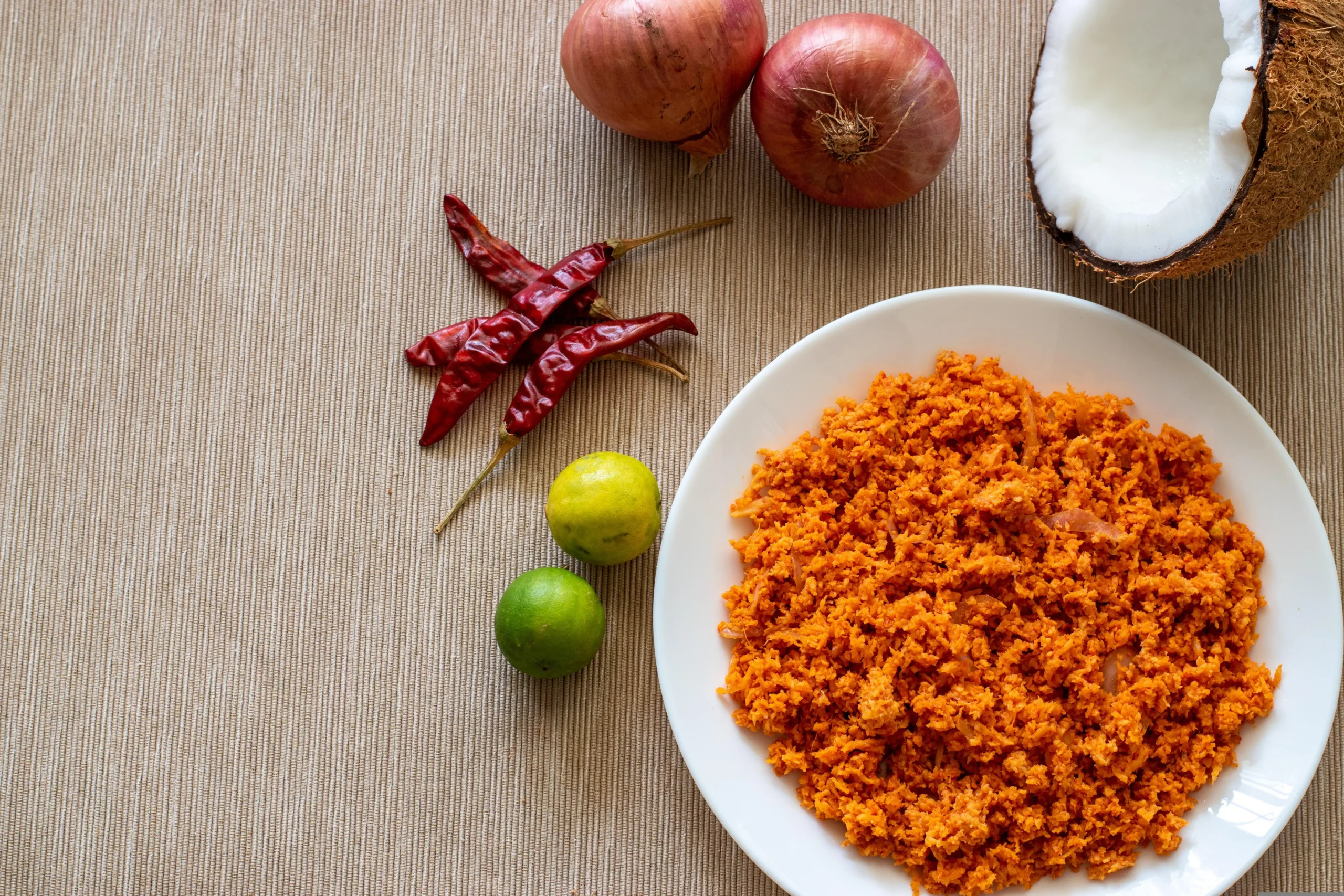
2) Pol sambol
A fresh coconut relish made with grated coconut, chili, lime, salt, and often Maldive fish (optional). It’s bright, hot, and addictive.
3) Mallung
Finely shredded leafy greens (such as gotukola, kathurumurunga, or spinach) sautéed lightly with grated coconut, onion, and spices. It’s a common everyday dish and a great example of how Sri Lankan cooking celebrates greens.
4) Vegetable curries
Sri Lankan cuisine turns simple vegetables into standout dishes—pumpkin, jackfruit, eggplant, okra, long beans, beetroot, and ash plantain are all common. Some are cooked creamy with coconut milk; others are “dry curries” stir-fried with spices.
5) Fish curry
With thousands of kilometers of coastline, seafood is central. Fish is often cooked with goraka for sourness, curry leaves, and roasted spices. Dried fish (karawala) also appears frequently, either fried crisp or cooked into sambols.
6) Chicken, mutton, or pork curry
These tend to be richer and more heavily spiced. Black pork curry is especially beloved in some communities, often dark with roasted spices and sometimes sweet-sour notes.
The experience of rice and curry is about contrast: creamy dhal against sharp sambol, mild pumpkin curry alongside hot chili, crisp papadam with soft rice.
Tempering: The Signature Sri Lankan Technique
A defining method in traditional Sri Lankan cooking is tempering (often called “thuna paha” style cooking in everyday language, though spice blends vary). Cooks heat oil and quickly fry aromatics like mustard seeds, curry leaves, dried chili, garlic, onion, and sometimes fenugreek. This fragrant base is added to curries or used to start them.
Tempering creates that unmistakable aroma you smell from Sri Lankan kitchens: toasted spices, curry leaves, and warm coconut oil.
Breakfast Traditions: Hoppers, String Hoppers, and More
Sri Lankan breakfasts can be elaborate, especially on weekends, and many items are built from rice flour and coconut.
Hoppers (appa)
Hoppers are bowl-shaped pancakes made from fermented rice batter, often with coconut milk. They’re crisp around the edges and soft in the center.
Common types:
- Plain hoppers
- Egg hoppers (with an egg cooked in the middle)
- Sweet hoppers (sometimes with jaggery or treacle)
Hoppers are typically eaten with lunu miris (a fierce chili-onion sambol), coconut sambol, and sometimes a mild curry.
String hoppers (idiyappam)
String hoppers are delicate nests of steamed rice flour noodles. They’re often served with:
- Kiri hodi (a coconut milk gravy with onion, curry leaves, and sometimes fenugreek)
- Dhal curry
- Pol sambol
Pittu
Pittu is a steamed mixture of rice flour and grated coconut, often made in a cylindrical mold. It may be eaten with coconut milk, banana, curries, or spicy sambols. It’s filling, rustic, and deeply traditional.
Roti and pol roti
Sri Lankan roti can refer to flatbreads made from wheat flour, but a particularly traditional version is pol roti, made with grated coconut mixed into the dough. It’s eaten with lunu miris, curries, or even sweet fillings.
Street Food and Short Eats: Everyday Sri Lankan Snacking
Sri Lanka has a vibrant culture of “short eats”—savory snacks sold at bakeries, tea shops, and street-side stalls.
Kottu roti
Perhaps the most famous street food today, kottu is chopped godamba roti stir-fried on a hot griddle with vegetables, eggs, and often chicken or beef, seasoned with spices and sometimes a curry gravy. The rhythmic clanging of metal blades chopping the roti is part of the experience.
Rolls and pastries
Sri Lankan bakeries sell:
- Fish rolls (spiced potato and fish in a crumbed roll)
- Vegetable rolls
- Cutlets (breaded croquettes, often fish or chicken)
- Patties (small pastry pockets)
- Samosas (especially popular in some communities)
Wade (vadai)
Lentil fritters—crispy, spicy, and perfect with tea. Variations include chili-studded vadai and softer versions made with different pulses.
Curries Beyond “Curry”: Sour, Dry, and Coconut-Rich Styles
Sri Lankan curries aren’t one category. Traditional cooking includes several distinct styles:
Coconut milk curries
Creamy, fragrant curries made with thick and thin coconut milk. These can be mild or spicy, but they tend to be rounded and rich.
Sour fish curries
Particularly common in coastal areas, fish is simmered with goraka (or tamarind) and spices for a bold sour-spicy flavor that pairs beautifully with rice.
“Dry” curries and stir-fries
Some dishes are cooked until the sauce reduces and clings to the ingredient—like spicy eggplant curry (often caramelized and tangy) or devilled dishes (stir-fried with chili, onion, and capsicum).
Ambul thiyal
A celebrated traditional preparation: ambul thiyal is a sour fish curry (often with tuna) cooked with goraka until it becomes dark, firm, and intensely flavored. It’s historically practical too—this style helps preserve fish longer without refrigeration.
Regional and Cultural Influences
Sri Lankan food reflects multiple communities and regional traditions. “Traditional” can mean different things depending on where you are.
Sinhalese home cooking
Often centered around rice and curry with lots of vegetable dishes, sambols, mallung, and coconut-based gravies.
Tamil and Jaffna cuisine
Northern Sri Lankan (especially Jaffna) food is known for:
- Bold spice
- Frequent use of seafood
- Distinct curry profiles, sometimes with different spice blends and techniques
There’s also a strong tradition of vegetarian dishes in Hindu households, especially during religious periods.
Moor and Malay influences
Sri Lankan Moor and Malay communities contribute dishes that often feature:
- Richly spiced meats
- Special rice dishes
- Festive sweets and snacks
Burgher (Eurasian) contributions
The Burgher community introduced and localized certain baked dishes and pantry staples, contributing to Sri Lanka’s diverse “traditional” table, especially in urban areas.
Festival and Celebration Foods
Traditional Sri Lankan food becomes especially symbolic during festivals and life events.
Sinhala and Tamil New Year (Avurudu)
Celebrated in April, Avurudu tables feature:
- Kiribath (milk rice): rice cooked in coconut milk until creamy, then cut into diamond shapes
- Lunu miris (spicy onion sambol) served with kiribath
- Kavum (oil cakes)
- Kokis (crispy molded rice flour snacks)
- Aasmi (lacy fried sweets with syrup)
- Aluwa, mung kavum, and many other sweets depending on region and family tradition
Kiribath is particularly meaningful—it symbolizes prosperity and new beginnings.
Weddings and special occasions
Large gatherings often include:
- Multiple curries (meat, fish, vegetable)
- Rich rice dishes
- Sweets and fruit platters
Menus vary by community, but the idea is the same: abundance and variety.
Sweets, Desserts, and Treacle
Sri Lankan sweets often revolve around rice flour, coconut, and local sweeteners.
Jaggery and treacle
Instead of refined sugar alone, traditional sweets frequently use:
- Kithul treacle (from the kithul palm): prized for its deep caramel flavor
- Jaggery (solid palm sugar)
Popular traditional sweets
- Watalappan: a steamed coconut custard sweetened with jaggery, flavored with cardamom and nutmeg (especially associated with Moor cuisine and festive occasions)
- Bibikkan: a rich coconut cake often made with jaggery and spices
- Kavum, kokis, aasmi: iconic Avurudu sweets
- Curd and treacle: buffalo curd served with kithul treacle is one of the simplest and most beloved desserts on the island
Drinks: Tea Culture and More
Sri Lanka is world-famous for Ceylon tea, and tea drinking is woven into daily life. A “cup of tea” can mean a quick break, a welcome for guests, or an accompaniment to short eats.
Other traditional or common drinks include:
- King coconut (thambili): naturally sweet coconut water sold roadside
- Herbal porridges and drinks (sometimes made with local greens and grains)
- Spiced drinks depending on household traditions
What Makes Sri Lankan Food Distinct?
Plenty of cuisines use rice, coconut, and spices, but Sri Lankan food has a few signature characteristics:
- A multi-dish meal culture
Even a simple lunch can include rice plus three or four sides. Balance comes from variety, not from a single main dish. - Coconut as a daily ingredient
Coconut milk isn’t just occasional—it’s a core cooking medium. - Bright, sharp accompaniments
Sambols, pickles, and sour curries cut through richness and keep meals lively. - Layered spice techniques
Between tempering, roasted curry powders, and fresh aromatics, flavors build in stages. - Regional diversity on a small island
Coastal seafood, hill-country vegetables, northern spice traditions—Sri Lanka changes quickly as you travel.
Is Traditional Sri Lankan Food Always Spicy?
It can be, but it doesn’t have to be. “Spicy” in Sri Lanka can mean:
- Chili heat (hot)
- Spice richness (aromatic and complex)
- Peppery warmth (especially in some meat dishes)
Many home meals include both mild and hot dishes so everyone can mix and match. If you’re new to the cuisine, you can often ask for “less chili,” but traditional flavors still rely on curry leaves, pandan, roasted spices, and coconut.
Vegetarian-Friendly by Nature
Traditional Sri Lankan food is often naturally vegetarian-friendly because so many everyday curries are made with:
- Lentils
- Pumpkin, eggplant, okra, beans
- Jackfruit (young jackfruit curry can be remarkably “meaty”)
- Leafy greens and mallungs
Even when fish or meat is present, vegetarian sides usually dominate the table.
How to Eat It: The Sri Lankan Way
In many homes and casual eateries, Sri Lankan food is traditionally eaten with the right hand, mixing a bit of rice with curry and sambol to create the perfect bite. It’s not mandatory everywhere, but it’s a common cultural practice and part of the sensory experience of the meal.
If you’re served a big plate of rice and curries, a good approach is:
- Start with small amounts of each curry
- Mix flavors gradually
- Use sambols and pickles sparingly at first—they can be intense
Where to Experience Traditional Sri Lankan Food
If you want to understand what traditional Sri Lankan food really is, the best versions are often:
- Home-cooked meals (if you’re invited, it’s a true cultural highlight)
- Small local rice-and-curry spots where dishes rotate daily
- Traditional breakfast shops serving hoppers, string hoppers, and pittu
- Markets and street stalls for short eats
Hotels can offer good introductions, but the most authentic experience usually comes from everyday places where locals eat.
Final Thoughts: More Than a Cuisine
Traditional Sri Lankan food is not just a list of dishes—it’s a pattern of eating that celebrates abundance, balance, and community. It’s rice at the center, surrounded by curries and sambols that reflect the island’s geography and history. It’s the fragrance of curry leaves in hot oil, the richness of coconut milk, and the bright punch of lime and chili. It’s everyday comfort food and festival celebration, all at once.
If you’re exploring Sri Lankan cuisine for the first time, start with a classic: rice and curry with dhal, a vegetable curry, a fish curry, and pol sambol. From there, move outward—toward hoppers and string hoppers, toward ambul thiyal and mallung, toward kiribath and kithul treacle. Traditional Sri Lankan food has depth, and every meal is an invitation to taste a different part of the island.